
Automatic Trailer Recognition
RFID recognition identifies the connected trailer and its programmed height. This helps the system work with the current vehicle combination when trailers are exchanged.
FleetFusion Bridge Strike Prevention
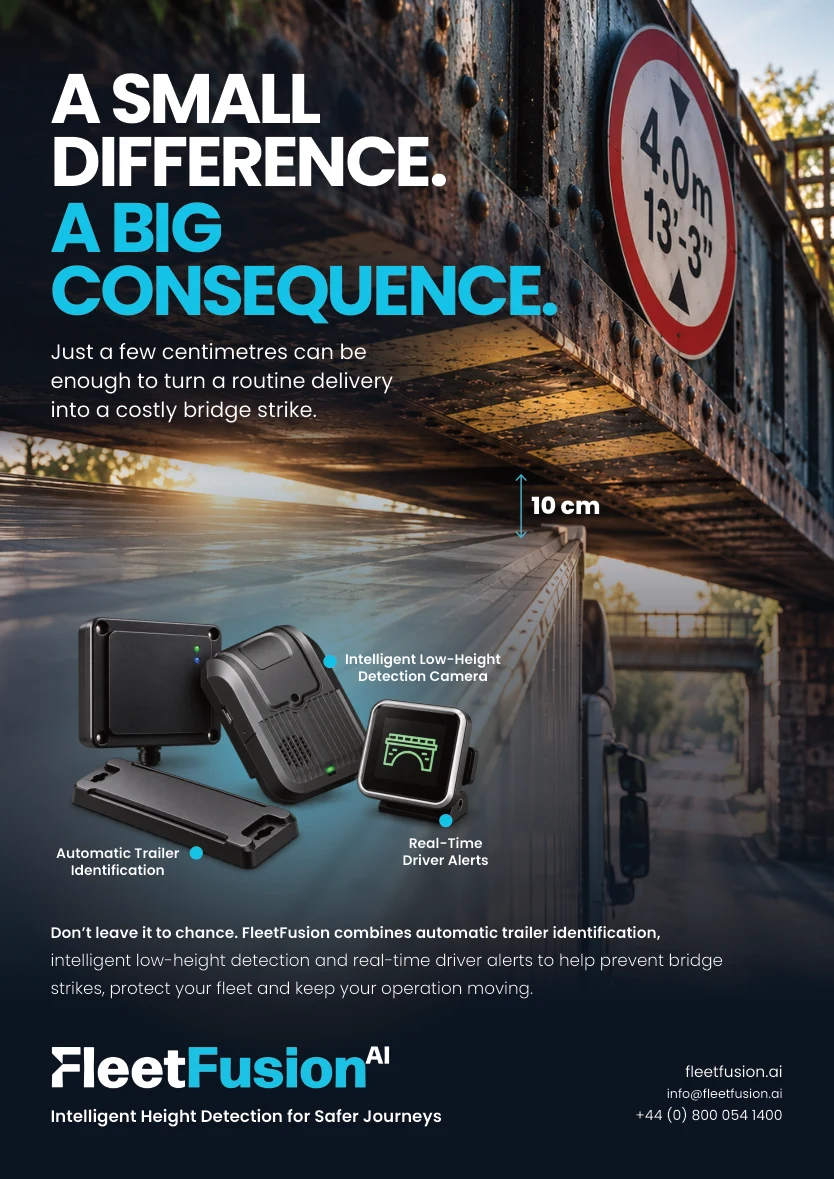
A few centimetres can separate a routine delivery from a bridge strike. Combine automatic trailer identification, intelligent low-height detection and real-time driver alerts to help your team recognize the risk before it becomes an incident.
Unfamiliar roads, a trailer change or a last-minute diversion can introduce a clearance risk into an otherwise familiar journey. Your driver needs to know the height of the combination being driven and receive a clear warning when an approaching bridge presents a risk.
FleetFusion brings three elements together: trailer recognition, a low-height detection camera and an in-cab alert display. Together, they help turn a potential clearance problem into a warning the driver can act on.
Watch the video to see the bridge strike alert solution in action.
RFID recognition identifies the connected trailer and its programmed height. This helps the system work with the current vehicle combination when trailers are exchanged.
A dedicated detection camera helps recognize an approaching low bridge. Supported bridge-location information adds context to the configured warning system.
Audible and visual alerts draw the driver's attention to a potential clearance risk, helping them stop safely and reassess the route before proceeding.
A tractor unit may work with several trailers during a shift. A height value left over from the previous trailer can give a driver the wrong starting point for the next journey.
RFID trailer recognition associates each tagged trailer with its recorded height. The in-cab display gives the driver a visible indication of the recognized height, or flags when no height has been detected.
Recognition uses recorded information; it does not replace measuring the vehicle and load. Review the height whenever the configuration changes.
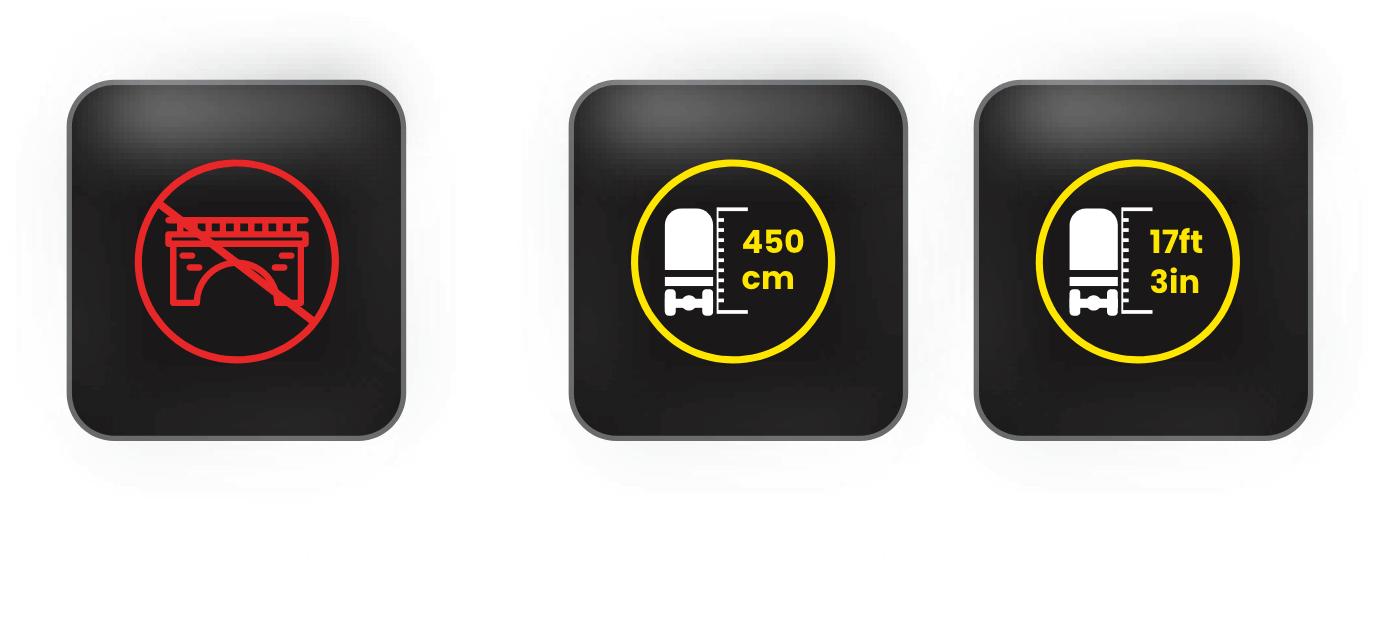

Drivers need a warning they can recognize quickly. The dedicated display uses clear bridge symbols and color-coded states, supported by audible alerts when a clearance risk is identified.
The system brings the recognized vehicle height and available bridge information into the warning process. A low-bridge indication draws attention to the restriction; the clearance status helps communicate the assessed risk.
A green indication is not permission to ignore a posted restriction. Drivers must still check signs, actual vehicle height and the conditions ahead.
A bridge strike can mean damaged equipment, a blocked road, interrupted rail services, missed deliveries and an investigation. Prevention supports the people in the cab, the teams managing the fleet and everyone relying on the infrastructure around it.

Help avoid vehicle repairs, recovery costs and the wider expense of an interrupted operation.

Reduce the risk of a vehicle, driver and load being taken out of service by an avoidable clearance incident.

Protect delivery commitments and the trust customers place in your transport operation.

Give drivers additional support on unfamiliar routes and when working with different trailers.
Keep the fleet records, equipment assignments and height-review responsibilities clear as vehicles and trailers change.
Explore Fleet Management →Use available tracking and connected dashcam or DVR evidence to understand an event, support an investigation and guide follow-up coaching.
Explore FleetFusion Vision →Bring route planning, dispatch and driver preparation into the same safety conversation. Confirm the restriction data and routing capabilities required for your operation.
Explore RouteFusion →Our team helps you define the equipment and setup for your operation. Start with the combinations you run, where they travel and how often trailers change.
List vehicle and trailer types, measured operating heights, trailer swaps and the routes or regions where clearance risks occur.
Confirm compatible hardware, RFID tagging, camera position, display location, power supply and the bridge data available for the intended region.
Check height recognition and alert behavior during commissioning. Train drivers to recognize missing-height and clearance warnings, and keep records current.
Bridge information and supported equipment must be checked for the country and routes involved. UK bridge-data coverage should not be assumed to cover US or other European operations. We will confirm the proposed configuration and coverage with you before rollout.
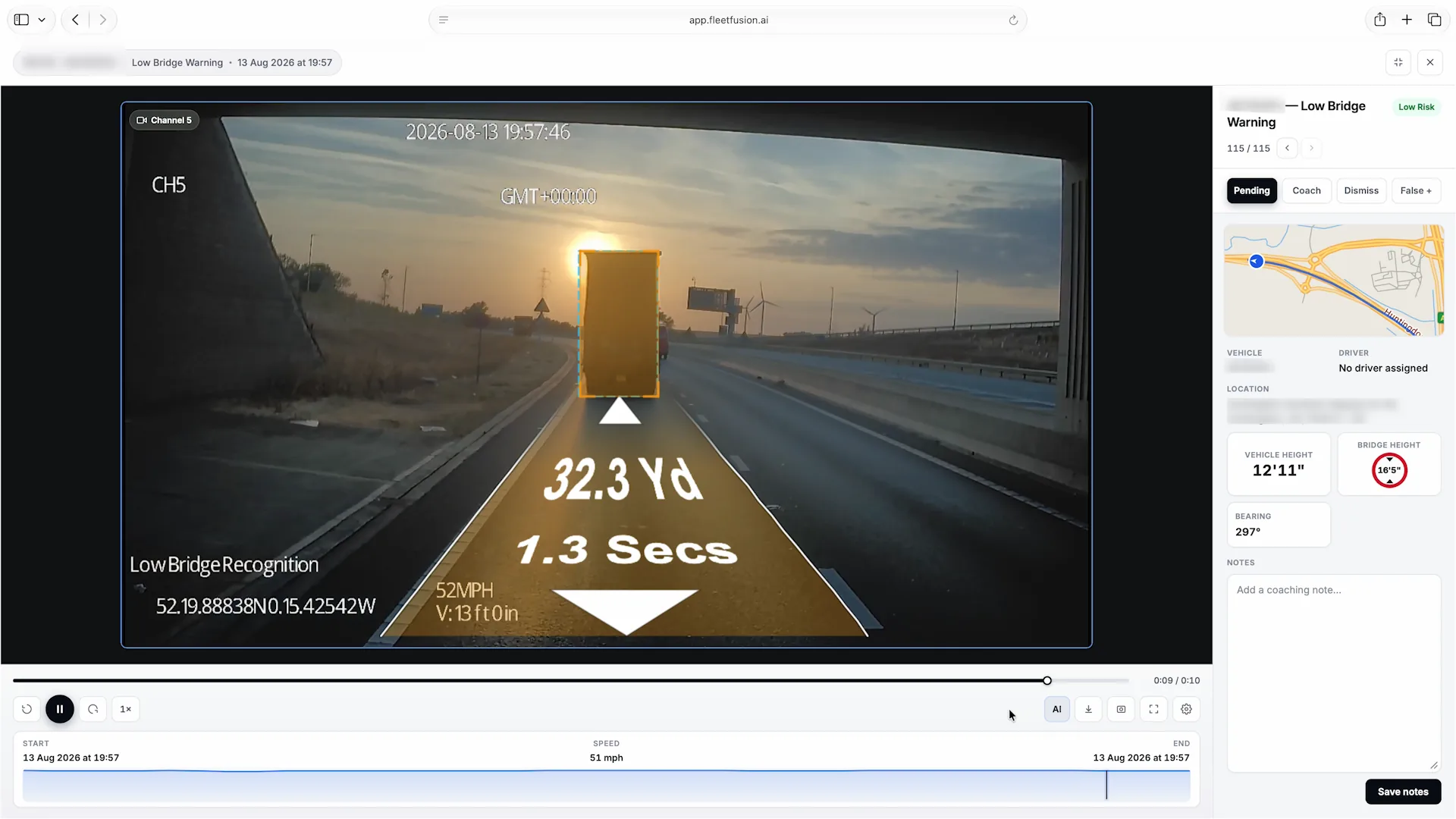
Bring low-bridge warning footage together with recorded vehicle height, bridge height and location. The office can review the approach, add notes and follow up with the driver using the event evidence.
The solution brings together automatic trailer identification, an intelligent low-height detection camera and an in-cab display with real-time audible and visual alerts. The exact equipment and installation depend on your vehicles and operating region.
Compatible RFID tags identify trailers and associate them with programmed height information. Accurate setup and maintenance of those records are essential, particularly when trailers, loads or vehicle configurations change.
The display can indicate that no height has been recognized. Drivers should follow the agreed check procedure and establish the correct operating height before relying on clearance information.
The proposed system includes a dedicated low-height detection camera and automatic trailer recognition as well as driver alerts. Supported bridge-location data forms part of the configuration; ask us to confirm the capabilities and coverage of the equipment proposed for your fleet.
Warning distance depends on the selected equipment, installation and operating conditions. We will confirm the supported detection and alert behavior for your configuration rather than apply one distance to every deployment.
RFID trailer recognition is designed to identify the connected tagged trailer. Each trailer needs accurate height information, and recognition should be checked whenever the combination changes.
No. It is a driver-assistance system. The driver must know the actual vehicle height, follow posted restrictions and assess road conditions. Alerts do not replace safe route planning or the driver’s judgment.