
A Known Tank Capacity
The vehicle’s tank size provides a reference for the model and a practical check on the amount of fuel being recorded.
CanFusion
Combine AI-predicted consumption, fuel-card transactions and driver-recorded fill-ups. CanFusion uses tank capacity and vehicle activity to flag fuel discrepancies and possible fraud—even with basic trackers and no CAN bus connection.
A fuel receipt tells you what was purchased. A tracker tells you how the vehicle is being used. CanFusion connects those records with the vehicle’s known tank capacity and AI-predicted consumption to build a running estimate of its fuel balance.
As the vehicle works and refuels, that estimate is updated. Your team can see where recorded purchases and expected usage stop adding up, even when the vehicle has no direct CAN fuel feed.
From Refuel To Review
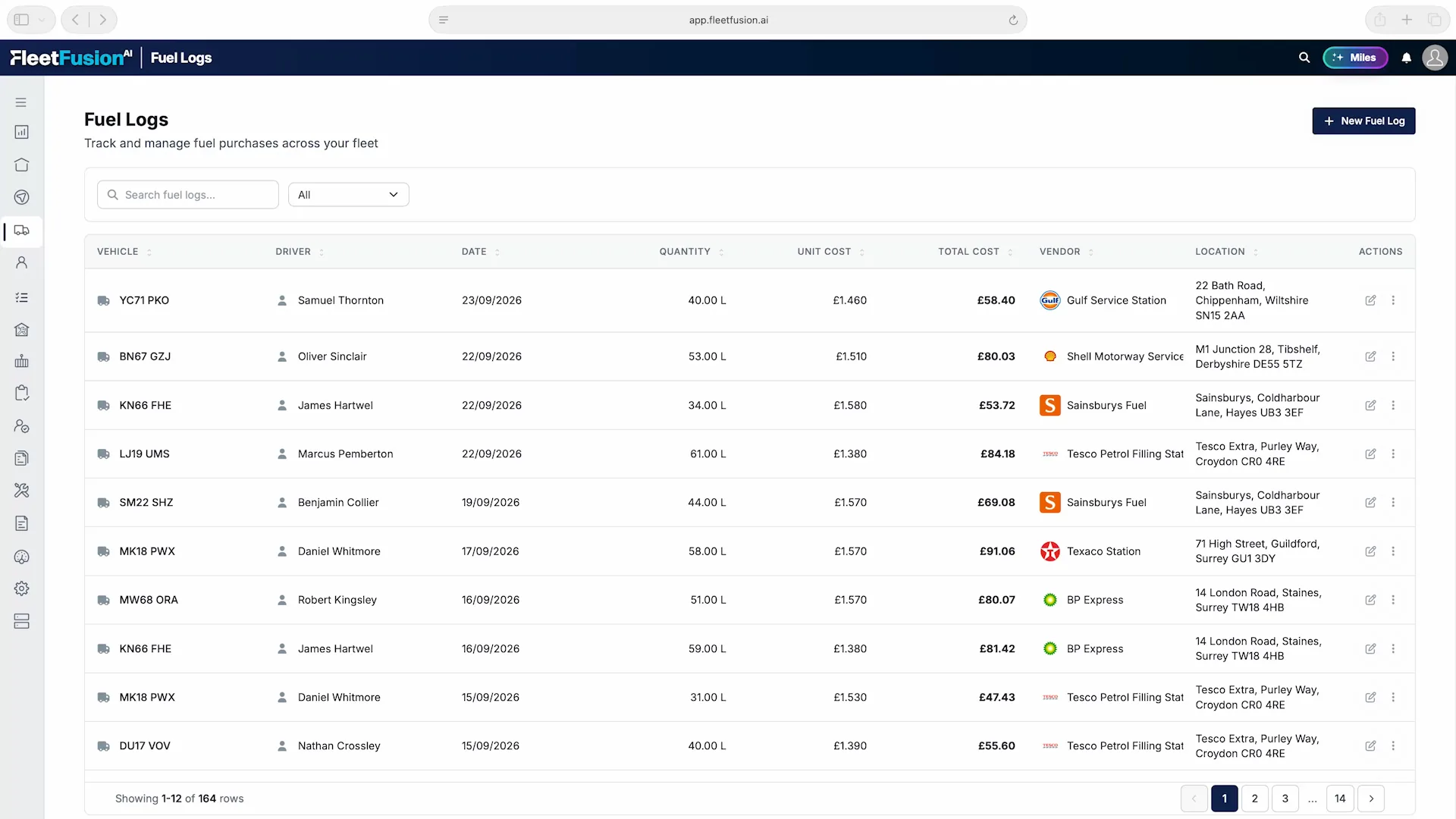
Bring transactions from supported fuel-card integrations into the vehicle’s fuel history. The purchased volume becomes part of the tank model, alongside the vehicle’s capacity and ongoing consumption estimate.
Drivers can record a fuel purchase in the FleetFusion driver app, scan a receipt or enter the details manually. These records give CanFusion another way to account for fuel added when a fuel-card feed is unavailable.
Both sources connect the refuel to the vehicle, so the office can review the purchase in the context of its use.
Not every fuel stop fills the tank. CanFusion models full and partial refuels against the vehicle’s known tank size, then accounts for expected consumption as the vehicle continues working.
The vehicle’s tank size provides a reference for the model and a practical check on the amount of fuel being recorded.
A recorded full fill establishes a full-tank reference. A partial fill adds the purchased volume to the running estimate, with tank capacity kept in view.
Tracker or camera activity feeds the consumption prediction. Expected fuel used is accounted for between purchases, keeping the fuel history connected to the work done.
CanFusion compares what was bought with what the vehicle could hold and what it was expected to use. Unusual quantities, an unexpected running balance or repeated differences can flag a transaction or pattern for closer review.
Open the underlying fuel records and consider the vehicle activity before deciding what happened. The exception gives your team a reason to investigate; it does not treat an estimate as proof of fraud.
CanFusion is trained on CAN data to predict fuel consumption from basic trackers and connected cameras. Combine that prediction with fuel records and tank capacity to extend fuel checks across vehicles without a CAN bus connection.
Keep measured CAN fuel data, predicted consumption and purchase records in the same fleet context, with each source clearly identified.
Let the driver record the fill-up through the app while CanFusion connects it to the vehicle’s expected fuel position.
Use discrepancies to direct attention to the vehicles and purchases that need an explanation.
The tank balance is an estimate built from recorded refuels, capacity and predicted consumption. Direct fuel-level readings remain identified as measured data where available.
No. The AI model is trained on CAN data, but it predicts consumption using data from suitable basic trackers or connected cameras. Fuel-card transactions or driver-recorded refuels and the vehicle’s tank capacity support the running fuel estimate and discrepancy checks.
Yes. Drivers can record purchases in the FleetFusion driver app by scanning a receipt or entering the details. Those refuel records can be used with CanFusion alongside the vehicle’s capacity and predicted use.
CanFusion accounts for the recorded amount added, rather than assuming every purchase fills the tank. A full-fill record provides a full-tank reference; partial refuels update the running estimate.
It means the recorded purchases, known tank capacity and expected use do not agree as expected. Review the underlying records and operating context to understand whether the difference reflects a recording error, unusual use, fuel loss or possible fraud.